
RSM People: Jon Hart
We speak with neurodivergent musician Jon Hart about his life in music and what led him to seek support.
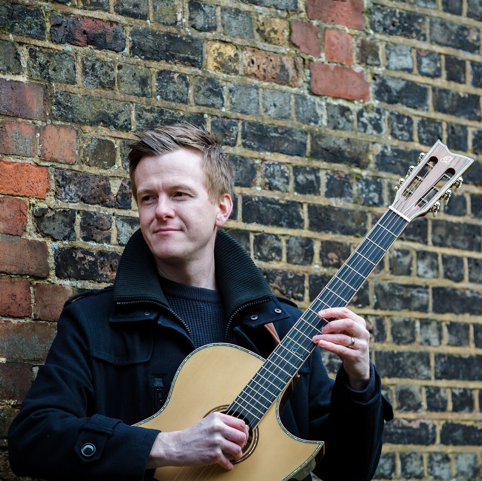
Can you tell us more about your musical journey and when you decided you wanted to become a musician professionally?
Music entered my life during a turbulent childhood. My mum became seriously unwell when I was young, my parents separated, and I spent a short period in foster care before my nan and aunt took me in. Around that time I began exploring the piano and my aunt noticed I had rhythm and curiosity. I started piano lessons at age give. The strict teaching style never suited me, but the instrument itself became a place where I could focus during a chaotic period.
Everything changed when I was eight and received a three-quarter size nylon string guitar for Christmas. I carried it everywhere, even to school without a case, and it quickly became part of my identity. I ended up with the nickname “Johnny Guitar”. By age 12 I had an electric guitar and started singing. Music became the place where I could process what was happening in my life and I began practising for hours every day.
I later studied music at Isle of Wight College and then at Southampton University. Academically I struggled but creatively I thrived and graduated with a 2:1 based largely on creative work. Over time I developed into a fingerstyle singer songwriter. Since 2015 I have released seven albums, three EPs and multiple singles, achieved more than five million Spotify streams, toured across the UK and Europe, and built a multi award winning wedding music business before it later collapsed.
Alongside my artist work I also created an online acoustic guitar academy with more than 200 teaching videos and 10 courses. Looking back, music began as a coping mechanism but it became my identity. Whenever people asked what I wanted to be when I grew up, the answer was always the same. I wanted to be a musician.
When did you first become aware of your neurodiversity and how was it expressed/manifested through your music?
My first diagnosis came in 2004 when I was assessed for dyslexia while studying music at Southampton University. At the time there was very little awareness around neurodivergence. I received accommodations like coloured overlays and extra time in exams but I did not fully understand what it meant.
Musically though I noticed that I experienced sound differently. I could hear subtle patterns, background harmonies and layers in recordings that others often missed. Sometimes when I play guitar I can almost hear orchestral arrangements in my head. Reading music was difficult because notation felt visually overwhelming, so instead I relied heavily on listening, experimentation and pattern recognition.
Fingerstyle guitar became the perfect outlet for that wiring because it allows rhythm, melody, harmony and percussion to exist together on one instrument. In many ways it mirrors how my brain processes sound.
When did you decide you needed to seek help and how was it impacting your personal and professional life?
The turning point came after the collapse of my wedding music business in 2017. The business carried my own name, so when it crashed it felt like my identity collapsed with it. Over the following years I was trying to rebuild work while raising two children and managing unresolved trauma and burnout.
Then the pandemic accelerated everything. In 2021, I experienced a panic attack followed by a severe mental health crisis. A psychiatric assessment later identified ADHD and autistic traits at age 38. That moment began what I describe as a five year metamorphosis involving identity reconstruction, treatment, grief, relief and unmasking.
During that period I experienced four severe mental health crises while several major life events were happening at the same time. I lost five grandparents, my marriage of 20 years broke down, I had no income for around one year while recovering and unable to attend to the business, and I had to distance myself from my unwell mother because the situation was too triggering.
At the same time I was trying to hold together parenting, work and my sense of identity. Everything felt like it was collapsing at once. My internal world felt like Chernobyl. Creativity became the main way I processed what I was going through and during that time I still released music, hosted a podcast and began building a community around neurodivergent musicians.
What was the process of approaching RSM like? Had you heard of the Society before?
After my crisis in 2021 I began searching for organisations that support musicians in difficulty. At that time my mental state made simple tasks extremely difficult. Applications and paperwork felt overwhelming while I was trying to stabilise mentally and financially. Reaching out to organisations like RSM became an important lifeline during those periods.
How was RSM able to help?
RSM provided financial support during several of the most difficult periods of my recovery. That support helped cover welfare and mental health related needs while I was trying to stabilise my life.
When people ask what that support achieved, the honest answer is survival. Without that support during those periods I do not know if I would have made it through.
How do you feel about your health now? Are you optimistic for the future?
After several years of crisis and recovery things are beginning to stabilise. Following my 4th crisis in August 2024 I made the difficult decision to remove as many external pressures from my life as possible so I could understand my real capacity and rebuild slowly.
I stopped drinking alcohol in February 2024 and later removed caffeine during ADHD medication titration. These changes helped stabilise my nervous system.
The journey has been extremely difficult but it has also created deeper self awareness and resilience. Out of that process I founded Neurodivergent Musicians, which is growing into a community supporting and advocating for neurodivergent musicians and creatives.
What would you say to other music professionals who may be suffering with their physical or mental health?
Many musicians assume they are failing personally when the real issue may be burnout, trauma or neurodivergence interacting with an industry structure that does not always support different ways of working.
Creative expression can be a powerful way to process what we are going through. Music, art or other creative outlets can act like an external hard drive for thoughts and emotions.
Peer support is also incredibly important. Speaking to people who share lived experience can create understanding that is difficult to find elsewhere. This belief led me to create Neurodivergent Musicians, a growing movement supporting and advocating for neurodivergent artists.
Musicians who resonate with this work are invited to share their experience or explore support through the project.